Belongingness: The human emotional need to be an accepted member of a group. Whether it is family, friends, co-workers, or a sports team, humans have an inherent desire to belong and be an important part of something greater than themselves. The motive to belong is the need for "strong, stable relationships with other people."
Birds flock, fish school, humans....? What do humans do? It's something I'm always thinking about. What are we hardwired for? It's relevant to technology opportunities since to tap into them requires understanding what the human animal needs/wants at a primal level and then servicing those needs.
And my conclusion is that - of all the animals in the kingdom we are most like (
get ready for it): wolves.
The similarities are interesting. We are both pack animals, with defined groups we belong to. Groups that have internal social heirarchies (alpha dogs, literally or metaphorically) and a constant struggle for some individuals to be that "alpha". Groups that can be vicious to outsiders, or to those members who violate the "rules". Rules that are for the most part, completely (in the wolves' case, totally) unwritten.

These rules and group norms are called "culture". And although we don't typically bite, both groups punish members who transgress those rules.
So I find it fascinating to watch how these hardwired behaviors impact on the evolution of virtual communities. Are the behaviors shown there really so different?
We seek out like minded people, with whom we share interests or values. On Facebook - are you "friends" similar to you? I always think of it as various circles I'm in. I have my techie friends, my political friends, etc etc. And within a few shades of gray, they align reasonably closely with my own interests, thinking and/or philosophy.
But occasionally someone will meander into a conversation, a friend of a friend from another circle, who doesn't know the inherent "rules" (everyone here is an atheist, and a conservative christian with wander in, for example), and proceed to disagree. Wham! The group typically shuts down the conversation. They didn't know the rules. How dare they enter. Tempers flare, words are written. It never ends up pretty. I regularly hear from a wide variety of people that the vitriol is "getting" to them.
So let's be honest, there's not a huge amount of open minded learning-type discussions on Facebook. For the most part it's either you're "hanging out" with people who already have a fair amount of overlap with your own ideas (or you knew them in junior high and couldn't turn down their friend request). Which contradicts what you probably THOUGHT a social place like Facebook would (should?) be.
I wish it were a place of learning and expanding. Instead it's interestingly becoming the opposite. Because human nature congregates and puts up walls, creating outsiders. The medium might champion (apparent) transparency, but human nature is doing exactly the opposite.
I use my own progression of involvement in social networking to illustrate.
Initially, like many, I friended lots of people outside my comfort zone. I figured that - a la a traditional cocktail party - I'd mix with lots of different types. After all, I consider myself fairly open minded; I might not agree with you, but I'm interested in why you think what you think, and thought I might learn something, hear a different point of view, expand my horizons, kumbayah kumbayah. I think many exuberantly flocked with the same excitement; even my dad (the original Mr. Magoo himself) had heard, and was curious to try, Facebook.
I hesitantly dipped my toes in the social water, tentatively,
politely, diplomatically, in well-brought-up style not reacting, contradicting, or challenging - but found instead is that it's virtually impossible to stay on the fence and be "myself". As time went on (and one
pugnacious twat interaction too many), I started culling the pack, so to speak. And have been left with circles (groups) of people who's values - within a few shades of gray - fairly closely already align with my own.
Which is a cop out, at least in my theoretical head. I've migrated to what is by my own definition being a bit close minded and occasionally (and I hate to admit it, but fair is fair) slightly (ok, I can't admit to more) adversarial....and contradicts the way I *actually* like to think about myself. Perhaps it's the subjects; social networking does seem to easily stray into subjects that were nary discussed with strangers until its advent (sex? politics? money? religion? how about all of the above?) - the transparency of the medium disallowing non engagement, perhaps. But for whatever reason, I'm clearly "there".
I hesitate (nay, reject! don't worry) to say that it's possible to generalize entire humanity's hardwiring based on looking only at myself as a petrie dish and am aware of the pitfalls in even mentioning myself as an example.
But I use it to illustrate what I've noticed going on all around me: from Facebook comments to online communities around a wide variety of interest / subjects / philosophies,
people self form into groups where their own behaviors / morals / values are reflected, create a set of "rules" around behaviors there as naturally (and unthinkingly) as breathing, and gravitate towards situations where they do not feel their own inherent values are challenged.
We know the rules, the culture - the unwritten language - and drift to where we are comfortable. And I do think we are hardwired to do this; throughout history, humans have clumped together into (wolf like) communities, either physically or interest-based (or both), and are now adding virtually to the list of ways to connect.
So if each virtual group is creating it's own "culture", and we humans tend to reject what isn't part of our "group", how do you get your brand message heard? Or more to the point, how do you get people to interact with you?
Particularly if (as I believe) traditional "push" advertising as we currently know it will increasingly fail in this new world, as people become more and more
spoiled used to streaming whatever they want on demand, sitting through enforced messaging will become less and less palatable - plus technology will enable them to choose what they want, when they want it, not on a predetermined schedule.
So they'll be ignoring your messaging, if done the traditional way. No more commercial break during your regularly scheduled programming. Other than, perhaps, live sports events.
It means that brands will have to become "friends" so to speak. They have to be responsive. They have to have 3D personalities, much like taking a brand and creating a restaurant "experience" requires re-imagining what the brands feels like, and translating that to interior decor.
But it will have to feel "authentic" to the person who's group you're trying to woo; you'll have to use their language, their timing, their norms, their rhythms; you'll have create the kind of interaction they expect, and to do that requires constant learning and feedback loops.
Because otherwise, just like wolves, you'll be snapped at and kicked out. Which will require a new way to analyze and learn the nuances of how we're talking to each other (along with
how we talked (channel),
where,
when, etc - see my previous entry
The Borogoves are a' Mimsying for a deeper explanation).
Traditional database analysis - where columns and rows are predetermined and the data fits neatly into the categories you set up - won't work anymore. Because the data will be people talking, using their own, private jargon with their own, group context/frame of reference (culture). The things that go unspoken that everyone just knows - a common frame of reference. These things lubricate our every interaction, seamlessly, without even a moment's notice for the most part. Even when you interact with someone from a really different culture - because you're both so trained to only think from your own frame of reference, that usually you don't even think to ask what their assumptions are (even if they could articulate them). It's the water we swim in, either unknowingly, or by choice.
And as each group has their own jargon and context, it become impossible to standardize...and add even another layer on top, language itself is so imprecise, imagine trying to explain to a logical, linear computer how to identify sarcasm (you look GREAT!) or indeed, slang "fat!" - at least, I think that's slang lol. But my own peeps grok me fine.
Our new gadgets create so much information as to make analysis fruitless, and indeed, back to that linear model - these need to be set up properly in the beginning, so if it's structured around apples and pears, what do you do when a kumquat walks in? We need ways to have computers that learn from experience and apply that intelligently to a new situation, because programming by anticipating precisely each potential variation when there's so much data, is impossible.
Starting to understand just how complex this all is?? Particularly since people are member of multiple groups, both real and virtual, and you'll have to get the timing right too. No good talking sports appropriate language when your customer is in helping his kids with homework mode.
I'm hearing all over the place that this kind of insight analysis (based on learning algorithms - some call it "artificial intelligence", or heuristic learning) vs linear analysis is indeed the next frontier; the limits of how far we can push the way data and analytics has always been done. And many are trying; there are fortunes to be made here.
So Skynet, here we come. Although I'd argue sentience is a far cry from learning abilities (I know not all agree...that's for another day). So I wouldn't be worried about those computer overlords just yet (Geek humor! - my group will "get" it!).
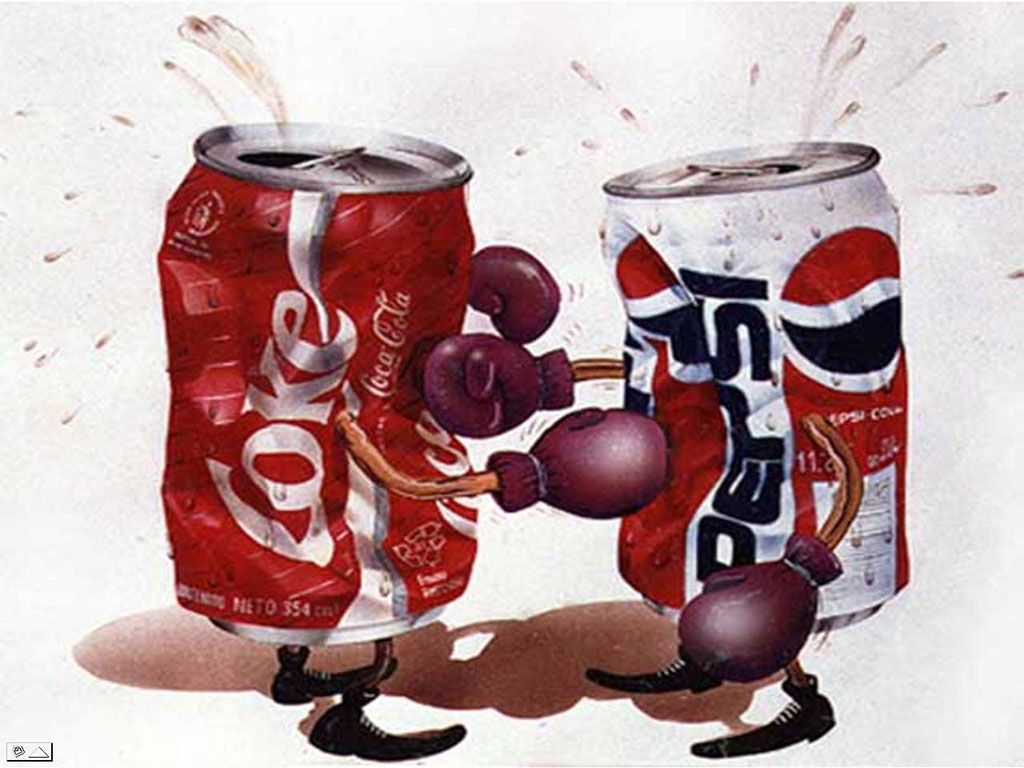 I've been watching the discussions around the launch of Google+ with interest. In the press there's a definite "Coke vs Pepsi", "Microsoft vs Apple" flavor to the discussion...I don't think this is relevant, as much as the press seems to like to hype, speculate and crow over every blow-by-blow "win" or "lose" as if it were a football game.
For me the relevant paradigm shift is that Facebook's monopoly has been broken; Google has opened Pandora's box, and I think social networking will be revolutionized by it.
Because it won't be about choosing which one you use, and then convincing all your friends to migrate. Everyone will just sign up for both - as it's free (more on that later) there's no need to choose.
"But my friends are all on ABC.com!" you say. (Ok, Facebook).
A hurdle, initially, as you need two apps, browsers, or however you interact with your social networking site. A royal pain indeed (and really very Web 1.0, if I do say so myself).
And let's not forget, Facebook and Google+ are only one flavor of current social networking sites. Everything from Linkedin to YouTube, Tumblr to Delicious, Twitter to StumbleUpon etc is a form of social networking - and we currently use each of these alone, with nary an integration in sight. Which is contributing to why it seems - well, overwhelming. Even to those of us who live and breathe this industry.
Until there's an app developed that eliminates the need to interact on those sites / apps only. It will pull the relevant data you specify in the manner you want it delivered, when you want it delivered, and in the format you want to interact with it. In other words, someone will develop an uber app which will let you personalize how you interact with other people digitally.
Because (imposed) walled gardens and dictated formats ultimately don't work in the digital world.
I've been watching the discussions around the launch of Google+ with interest. In the press there's a definite "Coke vs Pepsi", "Microsoft vs Apple" flavor to the discussion...I don't think this is relevant, as much as the press seems to like to hype, speculate and crow over every blow-by-blow "win" or "lose" as if it were a football game.
For me the relevant paradigm shift is that Facebook's monopoly has been broken; Google has opened Pandora's box, and I think social networking will be revolutionized by it.
Because it won't be about choosing which one you use, and then convincing all your friends to migrate. Everyone will just sign up for both - as it's free (more on that later) there's no need to choose.
"But my friends are all on ABC.com!" you say. (Ok, Facebook).
A hurdle, initially, as you need two apps, browsers, or however you interact with your social networking site. A royal pain indeed (and really very Web 1.0, if I do say so myself).
And let's not forget, Facebook and Google+ are only one flavor of current social networking sites. Everything from Linkedin to YouTube, Tumblr to Delicious, Twitter to StumbleUpon etc is a form of social networking - and we currently use each of these alone, with nary an integration in sight. Which is contributing to why it seems - well, overwhelming. Even to those of us who live and breathe this industry.
Until there's an app developed that eliminates the need to interact on those sites / apps only. It will pull the relevant data you specify in the manner you want it delivered, when you want it delivered, and in the format you want to interact with it. In other words, someone will develop an uber app which will let you personalize how you interact with other people digitally.
Because (imposed) walled gardens and dictated formats ultimately don't work in the digital world.


 Why am I not being surrounded with at the very least, a curved screen, and optimally - sitting in the middle of the action with a visor that put me into the movie? Whatever happened to the promise of virtual reality? The gaming industry is going there. I understand that it would require a tech revolution in filming technique (360° vision required), but as so much of the environment on screen
 Because this is what's happening to the generation being born. My nephew is almost 2. What struck me is how - without any real language skills yet (my sister would disagree) he tells her what he wants to watch, and when. He "requests"
 It struck me how well he described what goes on in my own head/gut, when thinking about what's happening in - and then forecasting - the tech world. He notices one person doing something, then sees it again later, and then watches for it, and voila! - he's spotted a trend. He doesn't judge, he just notices. And constantly scans, then connects the moving dots.
Which describes it perfectly.
I see an article. I see someone repost it. Then, I see another person refer to the concept in the article. Twice is usually enough to guarantee a potential meme.
Of course I've got a databank of personal theories and experiences to refer to - unconsciously matching up the two - just like Bill Cunningham, who sees a shape that reminds his of a prior shape, then recognizes the influence and voila! - has uncovered a current or theme that's being resurrected. I can only imagine how large his personal databank is at 80+; he has indeed probably seen it all.
Once a current (trend) emerges on the edges of my conscious periphery, insights or explanations come from extrapolating the inevitable trajectory using a handful of variables (human psychology, business trends, personal professional experience, macro economics, and a dose of "common sense"). Plus a wee bit of magic pixie dust...which probably explains using
It struck me how well he described what goes on in my own head/gut, when thinking about what's happening in - and then forecasting - the tech world. He notices one person doing something, then sees it again later, and then watches for it, and voila! - he's spotted a trend. He doesn't judge, he just notices. And constantly scans, then connects the moving dots.
Which describes it perfectly.
I see an article. I see someone repost it. Then, I see another person refer to the concept in the article. Twice is usually enough to guarantee a potential meme.
Of course I've got a databank of personal theories and experiences to refer to - unconsciously matching up the two - just like Bill Cunningham, who sees a shape that reminds his of a prior shape, then recognizes the influence and voila! - has uncovered a current or theme that's being resurrected. I can only imagine how large his personal databank is at 80+; he has indeed probably seen it all.
Once a current (trend) emerges on the edges of my conscious periphery, insights or explanations come from extrapolating the inevitable trajectory using a handful of variables (human psychology, business trends, personal professional experience, macro economics, and a dose of "common sense"). Plus a wee bit of magic pixie dust...which probably explains using 
 For those of you not familiar with what it is, it's basically exactly what it sounds like; a graphic designed with a program that generates actual 3D information is "printed" using a machine that takes the virtual information and slowly, a micron thick layer at a time, builds a "real" version of what was in the computer before - currently in a hard plastic resin. But rapidly expanding in terms of color, (eventually, faux) finishes, and (I believe) textures - so printing "leather" etc. might become a reality (with a nod to Corbusier, I'm not sure pony hair is an option, but then again, who knows?)
The technology has been around for quite a while, actually, predominantly to create prototypes for maufacturing, but has recently started getting good enough (and fast enough) to be used for making the actual objects. And although the size of what can be printed is currently limited, and it's still fairly time consuming, but it's improving rapidly.
The genius to this is that in the future, companies (or craftspeople) won't have to hold inventory. Customers can order customized (personalized) furniture for much less money (no hand labor!) and much quicker than if they waited for the "real" thing (if they were able to own the "original" at all).
And the most interesting part: it will completely disintermediate the retail channel.
No longer will retailers wield the power they now do since a person can go online, look at a virtual version of the cad file (using virtual world technology? Undoubtedly!), place it in a virtual mock up of their house, pick the col0r/dimensions they want, order it directly - and get exactly what they want. Without having to pay the (huge!!) retail markup. Little waste (much more environmentally friendly!) as there's no more guessing each season how many to make then dump, or in fact lose out on missed sales since the inventory wasn't available. With a license fee going to the artist who created the original design.
For those of you not familiar with what it is, it's basically exactly what it sounds like; a graphic designed with a program that generates actual 3D information is "printed" using a machine that takes the virtual information and slowly, a micron thick layer at a time, builds a "real" version of what was in the computer before - currently in a hard plastic resin. But rapidly expanding in terms of color, (eventually, faux) finishes, and (I believe) textures - so printing "leather" etc. might become a reality (with a nod to Corbusier, I'm not sure pony hair is an option, but then again, who knows?)
The technology has been around for quite a while, actually, predominantly to create prototypes for maufacturing, but has recently started getting good enough (and fast enough) to be used for making the actual objects. And although the size of what can be printed is currently limited, and it's still fairly time consuming, but it's improving rapidly.
The genius to this is that in the future, companies (or craftspeople) won't have to hold inventory. Customers can order customized (personalized) furniture for much less money (no hand labor!) and much quicker than if they waited for the "real" thing (if they were able to own the "original" at all).
And the most interesting part: it will completely disintermediate the retail channel.
No longer will retailers wield the power they now do since a person can go online, look at a virtual version of the cad file (using virtual world technology? Undoubtedly!), place it in a virtual mock up of their house, pick the col0r/dimensions they want, order it directly - and get exactly what they want. Without having to pay the (huge!!) retail markup. Little waste (much more environmentally friendly!) as there's no more guessing each season how many to make then dump, or in fact lose out on missed sales since the inventory wasn't available. With a license fee going to the artist who created the original design.

